Sulaymaniyah, Kurdistan
June 18,2023
Leaving Erbil, soon the road winds through the hills as I approach Sulaymaniyah. On either side of the road are fields. Some have been harvested and some are lush with crop.


The Saray Square, probably an old caravanserai, both from its name and the typical layout is locked as I peer at the statues from outside. I walk by the Kurdish Heritage House but it too is closed. Nobody seems to know when it might be open. But there is a chaykhana inside and like any traditional teahouse, it is the haunt of men. There is nary a woman, but they do not demur when I ask for a glass of tea. The much-touted Sulaymaniyah museum with artifacts from this area too is closed and locked. Based on what some other travelers I met, it seems that the museum is open one day/week, for about four hours.


It is shopping apparently that is the focus of this town. If Erbil was busy, then this is frenetic and the Grand bazar is hopping. Freshly baked naan is flipped out of a tandoor oven. I had read somewhere that the Kurds are fanatic about fresh food and this certainly bears that out. Vegetable and fruit stalls have sprung up on the street in front of the bazar. Inside the bazar is the spaghetti of lanes that wind at random like in any old souk.


Anything you could possibly want is for sale. Sheep heads and hoofs lie next to livers and hearts. Live chickens and roosters peck in their cages. I see a man carrying a sack with the necks of several live geese poking out of holes. The only thing missing seems to be live goats or sheep. A bird market has multicolored birds in cages. The baby chicks though wear neon colors courtesy of dye.


It is the feel of the town though that most intrigues me. There is a sense of openness and vivacity here. Most women I see are not enveloped in black head to foot. Most don’t even wear a hijab.


Dresses, skirts, jeans and tops are as common as anywhere else in the world. Nor are they always accompanied by men. What a drastic difference from cities in Iraq further south.


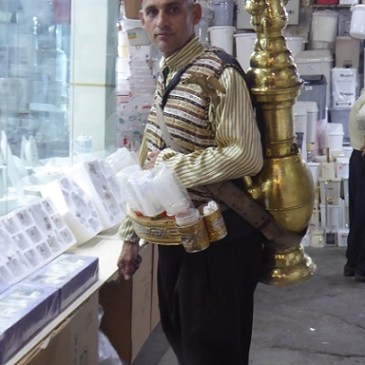
I see a man wearing a huge brass container with spouts. He calls out something I don’t hear but I follow him. This is the traditional clothes of men selling tamarind juice. He is happy to pose and I am happy to buy a cup of juice. It is delicious!
 ITCHY FEET TRAVELS