Goroka, Papua New Guinea
Sept 19, 2026
Rugged physical barriers and fierce inter-tribal warfare ensured that the tribes of Papua New Guinea remained in isolation for more than 50,000 years. Without a dominant ruler or a conquering empire to enforce uniformity, tribal cultures, traditions and languages unique to each tribe not only survived but thrived. The result is an ethnic and linguistic diversity in Papua New Guinea that is unmatched on the planet.
There are 840 living languages in Papua New Guinea and 700-1000 distinct tribes. It is amazing, incredible and utterly mind boggling! This is the most diverse country in the world. And the Goroka Show is where this diversity is showcased over a multi-day event. This is a show with no parallel in the world.
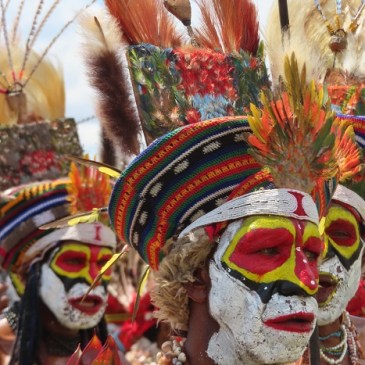
Agog with anticipation, I walk to the arena early. The first group is already at the gate, with tall white feathered headdresses, their bodies painted ocher. The leaders beat hand drums and dance their way in with leaping, bouncing steps making the palm skirts flare out. The rest of the group lined up on either side follow with loping strides, chanting a chorus. I soon see other groups enter and the arena reverberates to the beat of hundreds of drums and thousands of voices. The colors and costumes are wildly different, each more eye-catching then the last. I have to scrape my jaw off the ground as I try to take it all in.


Some groups dance in circles while some form long queues. Some sit in tightly packed rows. The rainbow of colors, the boom of drumbeats and the roar of chanting voices are all around me. I am on sensory overload.


Grass, leaves, fur, shells, wood, bamboo, feathers, bark, cloth and a hundred other materials go into making the costumes. Ferns and feathers, shells and beads, twines and vines are used in an unbelievable variety of ways in colors spanning the spectrum. It defies description.


Hornbill beaks and boars’ teeth form necklaces as do shells large and small. The group from Madang province tells me that the decoration on their tall green beehive shaped hats are rows of tiny beetle heads. I learn that the large black hats of the Huli Wigmen and the Enga tribes are made of human hair. The colors of body and face paint runs the gamut from yellow to ocher to gray to blue to an uncompromising black.


A small group wears masks made of cane, wood and bamboo and daubed with mud. It is past midday and the arena is packed with a bewildering number of groups. It is hard to tell just how many there are. I am told there are more than a hundred tribes today.


The sound of deeper drumbeats draws me to one corner of the arena. They have hollow logs and coax out a jaunty beat that has my foot tapping. Nearby are a pair of instruments I have never seen before. A pair of men sit atop lashed bamboo tubes and beat them with rubber paddles. The notes complement the drums and the guitars perfectly.


The groups are all friendly and I chat with some groups, try out dance steps with some others. I marvel at their energy. They have been singing and dancing for several hours and show no signs of flagging! Nor do they grudge the incessant requests for photos. Broad smiles and patient poses are very much the norm.


