Koronadal, Philippines
Sept 9,2026
The Austronesians, having reached Mindanao settled on the coast and in the wide fertile valleys. There is archeological evidence, especially from Butuan in the northeast to suggest settlements with established maritime trade networks. Subsequent incursions from the west brought with it new threats, new religions considered particularly dire ones. Preferring to retain their animist beliefs, the tribes moved inland, to the forested highlands.
As they spread to occupy different parts of the island, the factions assumed identities of their own. Today, the Subanon call the Zamboanga peninsula home. The Agusan and Bukidnon pepper the central and northern highlands. The Mandaya and Mansaka inhabit the eastern mountains. And the T’boli and the Blaan call the highlands of southern Cotabatu their home. It is the T’boli (also called Tiboli) that I wanted to visit before leaving Philippines.
And so began the journey inland via the usual combination of bus, van, tricycle and motorbike taxi. The only major road is straight, in decent shape and lined with shacks selling local produce from the farms that start just beyond.


Koronadal is a largish town that wears its scruffiness with pride. Local markets are usually a wonderful pulse of a village or town so I head there. The market has separate sections, with an outer fringe of fruit and vegetable sellers.


There are stalls for woven baskets, hats and vicious looking knives. Give it a few years and these will most likely be souvenirs. But not yet.


My nose guides me to the fish market. Mostly from fish farms, there are plenty of live ones.


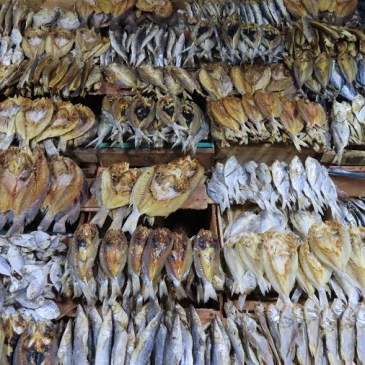
An even more pungent odor guides me to the dried fish vendors. Splayed and sectioned, in bins and boxesand trays, they may not look terribly appetizing but have a steady stream of customers.


And then I see the clams, mussels and snails. I have never seen so many different varieties in one place before! They are alive, some valiantly trying to make a getaway at their snail pace.


I see banana leaves bundled for sale and the thin spring roll skins being made. Conversations are the norm as are the smiles. I emerge having tried a bit of this and a pinch of that. And now want a meal.


At a local eatery, I fall into conversation with the owner and her friend. Unable to connect to hotels online or via the phone, I ask if they have any contacts in Lake Sebu. The result of their phone calls to friends is that many places are open, have vacancies but apparently decline to answer phones. Or there is no signal. I will just have to play it by ear. Armed with their phone numbers and that of their friend who will help me out, I am touched by their kindness to a total stranger. Yet again I am befriended! How lucky am I? Better yet, I get a history lesson.
“All this used to be forest – just land, nobody owned them” said Lowella.
“The government said anyone who can clear the land can have it” echoed her friend, Marianne.
So in the 1950s, people from the Visayas among others, migrated enmasse to Mindanao. Lowella and Marianne’s parents were among them. They cleared what used to be virgin forests and built farms. It is the fruits of those farms that I sampled in the market.
The T’boli and the Blaan who had retreated into the forests in the face of encroachment in years past, moved again. Now they are further up the mountains. It is there that I head next to learn what I can about their traditions. Posts and pages are at the mercy of connectivity. They may have to wait until I get back to the grid.

